











Beards look simple from the outside. Grow them out, shape them properly, and maintain them every few days. But facial hair behaves very differently from the hair on your scalp.
That difference becomes more obvious once beard itch starts showing up or when ingrown hairs under the beard become constant. It is sometimes painful and even inflamed enough to leave dark marks behind.
For men with curlier or coarser facial hair, the issue tends to happen more often. This is also why beard itch is rarely just “dry skin.” In many cases, it is a follicle issue, a skin barrier issue, or both happening simultaneously.
In this article, we’ll break down why facial hair becomes itchy, why curly follicles are more prone to ingrowns, and what actually helps reduce irritation long-term.
Why Curly Facial Hair Causes More Ingrown Hairs
Straight hair exits the follicle and continues outward relatively cleanly.
Curly hair behaves differently. As the strand grows, it naturally curves back toward the skin surface. If dead skin, oil buildup, inflammation, or shaving irritation blocks the follicle opening, the hair can curl inward and re-enter the skin instead of growing outward properly.
That is essentially what an ingrown beard hair is.
And once that happens repeatedly, the skin starts reacting defensively. In more persistent cases, post-inflammatory pigmentation starts lingering even after the ingrown itself disappears.
According to the American Academy of Dermatology’s guidance on razor bumps, coarse and curly hair types are significantly more prone to razor bumps and ingrown hairs because shortened hairs can curve back into the skin after shaving. This explains why some men can shave daily without issues, while others develop irritation after a single pass.
Beard Itch Usually Starts Before the Hair Gets Longer
A lot of people assume beard itch only happens during the awkward “growing phase.” But that is not exactly the case.
The itching often starts earlier, when the follicle itself becomes stressed.
This can happen because of:
- Skin dehydration
-
Friction from shaving
- Barrier disruption
- Product buildup
- Inflammation around the follicle
- Dead skin trapping the emerging hair
Once the area becomes inflamed, every new strand pushing through the skin becomes more irritating. The solution is rarely one single product alone. It is usually about improving the skin environment underneath the beard.
Why Beard Skin Gets Drier Than You Think
Facial hair changes how the skin behaves.
Once the beard becomes thicker, natural oils have a harder time distributing evenly across the surface. Dead skin cells also become trapped more easily beneath dense facial hair. That trapped buildup creates friction around follicles. And friction increases inflammation. This is why beard itch and ingrown hairs often appear together.
At DS Laboratories, we usually look at beard irritation through two lenses:
- Follicle behaviour
- Skin barrier health
That’s because treating one without the other usually leads to recurring irritation. For men dealing with dehydration around the beard area, supporting the skin barrier first often reduces itching significantly over time. Our dehydrated skin collection is designed specifically to support compromised, irritated, or moisture-deficient skin without overwhelming the follicle environment.
The Problem with Over-Shaving Curly Facial Hair
Frequent shaving creates another issue entirely.
Every close shave creates a sharper hair tip during regrowth. On curly hair types, that sharpened strand can curve directly back into the skin much faster.
That is why men prone to ingrown beard hairs often experience worsening irritation immediately after shaving. That’s not because shaving itself is “bad,” but because repeated close cutting changes how the strand re-enters the follicle opening.
Why Healthy Beard Growth Actually Reduces Irritation
Interestingly, patchy or weak beard growth can sometimes increase irritation.
Uneven growth patterns create inconsistent follicle density, which can lead to awkward regrowth directions and more trapped hairs in certain areas of the beard. That is part of why we developed Spectral.BRD® Advanced Beard Conditioning Serum
Instead of functioning like a basic beard oil, Spectral.BRD® approaches facial hair growth from a follicle-support perspective. The formula combines clinically studied ingredients with nanosome delivery technology to help improve beard density, reduce patchiness, and support healthier follicle function over time. Better follicle consistency often leads to cleaner beard growth patterns overall, particularly for men struggling with uneven density and irritation-prone areas.
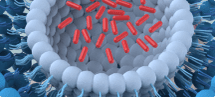
Since the active ingredients are delivered gradually through nanosomes, the formula stays more targeted instead of overwhelming the skin surface immediately.
Beard Ingrown Hair Treatment Requires More Than Exfoliation
Most people immediately jump toward scrubs or aggressive exfoliation once ingrown hairs start happening.
That usually backfires.
Over-exfoliating inflamed skin weakens the barrier even further. The goal is not to aggressively “remove” ingrowns. The goal is to reduce the conditions that keep causing them repeatedly.
A proper beard ingrown hair treatment approach usually includes:
- Barrier support
- Controlled exfoliation
- Reduced follicle inflammation
- Proper hydration
- Smarter shaving habits
- Healthier hair growth patterns
Consistency matters more than intensity here. Also, products focused on inflammation control tend to perform better long-term than harsh physical scrubs alone.
Why Hair Texture Changes the Entire Approach
Curly facial hair simply behaves differently.
Tighter curls create more bends along the strand, increasing the likelihood of the hair looping back into the skin before fully exiting the follicle.
That means men with coarse or curly beards often need:
- More hydration
- Less friction
- Less aggressive shaving
- Better follicle maintenance
- Smarter growth support
The same grooming advice that works for straight hair does not always translate properly. Honestly, this is where a lot of generic beard advice falls apart. Most beard content talks about styling. Very little talks about follicle mechanics underneath the skin.
Where Keramene Fits Into the Conversation
For men dealing with extra-aggressive body or facial hair regrowth patterns, reducing irritation sometimes also means slowing the regrowth cycle itself.
Keramene is developed specifically around that idea.
The formula helps slow visible hair regrowth while supporting softer, less coarse hair texture over time. It also contains witch hazel and conditioning ingredients designed to reduce inflammation and minimise ingrown hair formation, particularly in sensitive areas prone to repeated shaving or friction.
This becomes especially useful for men constantly dealing with recurring irritation around the neck, jawline, or beard edges.
Learn what causes beard itch and ingrown hairs, why curly hair follicles are more prone to irritation, and how to properly support healthier beard skin.
The healthiest beards are usually simply supported properly underneath. Less inflammation. Better hydration. Cleaner follicle function. More controlled regrowth patterns.
Throughout the DS Laboratories catalogue, science has always been a major focus. Our formulations are backed by research, with ingredients developed around how hair and skin biologically behave beneath the surface.
You can explore more of our science-backed formulations and medical publications, especially if you are dealing with ongoing beard, scalp, or skin concerns and want a more treatment-focused approach to care.