















You’ve started using a hair-density product.
You’re watching your brush.
Checking your parting.
Looking closely at your scalp in the mirror.
And wondering:
When am I actually going to see a difference?
It’s one of the most common questions people have when they begin a hair-density routine.
And the answer is important:
Hair-density treatments take time because hair itself grows in cycles.
Some changes may be noticed relatively quickly.
Visible improvements in density usually take longer.
First: Not All “Results” Mean the Same Thing
When people say:
“Is this product working?”
they may actually be asking about very different things.
For example:
- Does my scalp feel cleaner?
- Am I shedding less?
- Does my hair feel fuller?
- Is my ponytail thicker?
- Is my parting looking narrower?
- Am I actually growing more visible hair?
Those changes do not necessarily happen at the same time.
That is why it helps to understand the difference between:
Immediate cosmetic benefits
and
Longer-term hair-density results
What Can Happen Quickly?
Some products can improve the look and feel of your hair almost immediately.
A good shampoo may leave the scalp feeling cleaner.
Hair may feel lighter, healthier or more manageable.
You may notice improved volume or body after washing and styling.
These are useful benefits.
But they are not the same thing as a biological change in the hair-growth cycle.
What Takes Longer?
If your goal is:
Reduced visible shedding
Thicker-looking hair
Improved density
Better scalp coverage
Fuller-looking hair over time
then patience matters.
DS Laboratories says visible improvements in hair thickness and density with
consistent use of Revita Hair Density Shampoo typically appear around 90 days.
For Spectral Women’s, fuller-looking hair may be seen from around 90 days,
with peak results around 180 days.
So the realistic mindset is:
Think in months, not days.
Why Does Hair Density Take So Long?
Because your hair is not continuously growing at the same rate.
Every follicle moves through a natural cycle.
There are periods of:
Growth
Transition
Rest
Shedding
A targeted hair-density treatment is working within that biological process.
That means visible change cannot happen overnight.
The follicle needs time to respond.
The hair needs time to grow.
And enough new growth needs to become visible before you notice a meaningful difference in density.
A Simple Hair-Density Timeline
Everyone is different, but this is a useful way to think about the journey.
DAYS 1–30
Focus on the scalp and routine.
At this stage, you are building consistency.
You may notice:
- A cleaner-feeling scalp
- Improved manageability
- Better-looking hair
- Improved cosmetic volume
- A routine that feels easier to maintain
With Revita, DS Laboratories says some users may notice improved scalp cleanliness and reduced shedding within the first 2–4 weeks.
But don’t expect dramatic new density yet.
AROUND 60–90 DAYS
This is when the journey becomes more interesting.
With consistent use, you may begin noticing:
- Less visible shedding
- Better overall hair appearance
- Improved thickness
- Fuller-looking hair
- Improved scalp coverage
DS Laboratories reports clinically proven results with Revita after 90 days of daily use. On its South African site, a clinical study of 140 clients reported that 92% experienced a decrease in hair loss, 85% experienced an improvement in overall hair appearance, and 70% experienced a reduction in hair-loss rate.
AROUND 90–180 DAYS
This is an important window for targeted leave-in treatments.
Spectral Women’s is designed specifically for women concerned about thinning hair and reduced density.
DS Laboratories advises that fuller-looking hair may become visible from around 90 days, with peak results around 180 days.
That means if you use a product for three weeks and decide:
“It isn’t working.”
you may simply be stopping far too early.
Why Consistency Matters So Much
Hair-density products are not designed to be used occasionally.
Consistency matters because you are supporting an ongoing biological cycle.
Skipping applications regularly, changing routines constantly or stopping after a few weeks makes it much harder to judge whether a product is actually helping.
Think about it like this:
Start.
Stay consistent.
Give the hair-growth cycle time.
Then assess your progress.
How Should You Track Results?
One of the biggest problems with hair-density treatments is that change happens gradually.
When you look at yourself every day, it can be difficult to notice progress.
So don’t rely only on memory.
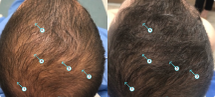
Take photographs.
Before starting your routine, photograph:
- Your centre parting
- Your hairline
- Your crown
- Any area where you can see more scalp
Then repeat the photographs every four weeks.
Try to use:
- The same lighting
- The same angle
- The same hairstyle
- The same distance from the camera
This gives you a much more objective way to compare progress.
Don’t Judge Progress by One Bad Hair Day
Hair shedding naturally fluctuates.
Stress, illness, hormones, diet and the normal hair-growth cycle can all affect what you see in your brush or shower.
So one day of heavier shedding doesn’t necessarily mean your routine has failed.
Look for patterns over time, not daily perfection.
What About Revita Hair Density Shampoo?
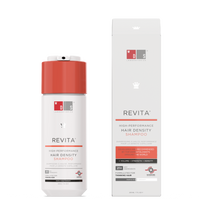
Revita is designed to support thicker, stronger, fuller-looking hair while helping maintain a healthy scalp environment.
DS Laboratories says users can expect healthier and better-looking hair from the beginning, while visible improvements in thickness and fullness generally require approximately 2–3 months of consistent use.
The important words are:
consistent use
A hair-density shampoo needs to be part of the routine, not something you use once every few weeks.
What About Spectral Women’s?
Spectral Women’s is a leave-in hair-density treatment formulated specifically for women.
It contains Nanoxidil® 5% and uses DS Laboratories’ Advanced Nanosome Delivery System®.
The product is designed to support the appearance of:
-
Hair density
-
Thickness
-
Volume
-
Reduced visible shedding
-
A healthier-looking scalp and hair
Fuller-looking hair may begin to appear from around 90 days, with peak results around 180 days.
That is why a three-to-six-month mindset is much more realistic than expecting change in a few weeks.
Should You Use More Than One Product?
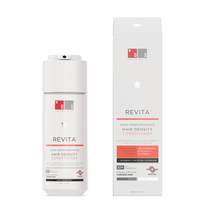
For women experiencing thinning, visible shedding or reduced volume, DS Laboratories South Africa offers a Women’s Hair Density Kit combining Revita Hair Density Shampoo and Spectral Women’s.
The shampoo supports the scalp and cleansing step.
Spectral Women’s provides the targeted leave-in treatment.
Used together consistently, they create a simple routine designed around the same goal:
Supporting fuller, denser-looking hair over time.
When Should You Be Concerned?
Not all hair shedding should simply be treated cosmetically.
If you experience:
- Sudden or severe hair loss
- Bald patches
- Significant scalp irritation
- Pain or inflammation
- Rapid unexplained thinning
- Hair loss following a major health change
It is important to speak to a qualified healthcare professional or dermatologist.
A haircare product cannot diagnose or treat an underlying medical condition.
The Most Important Thing to Remember
Hair-density treatments are not quick fixes.
They work within a slow biological process.
So instead of asking:
“Did this work after two weeks?”
ask:
“Have I used it consistently for long enough to fairly judge the result?”
For many DS Laboratories hair-density products, around 90 days is an important milestone, with some targeted treatments continuing to show progress towards 180 days.
Start. Stay Consistent. Give It Time.
If you’re concerned about shedding, thinning hair or reduced density, you can explore the DS Laboratories South Africa hair-thinning range and find a routine suited to your concern.
And if you’re not sure where to begin, use the AI Hair Assistant on the DS Laboratories South Africa website to ask questions about your hair, your routine and the available products.
EXPLORE HAIR-DENSITY SOLUTIONS
Visit DS Laboratories South Africa – Hair Thinning
Because with hair density, consistency is not optional — it is part of the process.
Individual results vary. Product timeframes should be interpreted according to the specific product directions and supporting clinical data.